"History is a wonderful thing, if only it was true"
-Tolstoy

Friday, April 30, 2010

Model or not?

Pros and Cons of some of the ideas

Portland and “elite cities”: The new model | The Economist:

Is Oregon’s metropolis a leader among American cities or just strange?

Joel Kotkin, a Los Angeles-based demographer and author, thinks that places like Portland, San Francisco and Boston have become “elite cities”, attractive to the young and single, especially those with trust funds, but beyond the reach of middle-class families who want a house with a lawn. Indeed Portland, for all its history of Western grit, is remarkably white, young and childless. Most Americans will therefore continue to migrate to the more affordable “cities of aspiration” such as Houston, Atlanta or Phoenix, thinks Mr Kotkin. As they do so, they may turn decentralised sprawl into quilts of energetic suburbs with a community feeling.

That is not to belittle Portland’s vision. It is a sophisticated and forward-looking place. Which other city can boast that its main attraction is a bustling independent book store (Powell’s) and that medical students can go from one part of their campus to another by gondola, taking their bikes with them? Other cities will see much to emulate. Minneapolis, for example, this month displaced Portland as Bicycling magazine’s most bike-friendly city (“they got extra points for biking in the snow,” grumble Mr Adams’s staff). Adam Davis of Davis, Hibbitts & Midghall, a Portland polling firm, says that Oregonians like to consider themselves leaders but also exceptions. They are likely to remain both.

Buffett and Derivatives

Buffett and Derivatives: Exactly Where Does He Stand? - MarketBeat - WSJ

"Here’s how he put his thoughts — and the thoughts of his longtime partner Charlie Munger — in his most recent letter to shareholders:

We have long invested in derivatives contracts that Charlie and I think are mispriced, just as we try to invest in mispriced stocks and bonds. Indeed, we first reported to you that we held such contracts in early 1998. The dangers that derivatives pose for both participants and society – dangers of which we’ve long warned, and that can be dynamite – arise when these contracts lead to leverage and/or counterparty risk that is extreme. At Berkshire nothing like that has occurred – nor will it.

Not as fast as I once thought I was

Sub 5 seconds 0 to 60, 11 second quarter mile, 100MPH in 3rd gear
Was fast for it's time (1985) still impressive today, and almost 40MPG


What does the public want?

Pending decision on the next member of the Supreme Court

Lexington: The next Supreme Court justice | The Economist:

"Americans need protection, but from whom?
Everyone agrees that the constitution is supposed to protect the weak against the mighty. But Republicans and Democrats differ sharply as to which mighty institutions pose the greatest threat to the little guy. Democrats, by and large, think big corporations are the problem. Republicans think big government is. For example, Democrats deride the court for ruling that companies may spend as much money as they like on political ads at election time. This will allow the likes of Exxon Mobil to drown the voices of ordinary citizens, they say. Many Republicans, in contrast, applaud the court for stopping incumbent politicians using campaign-finance laws to silence critical speech about themselves.

In this instance, public opinion favours the Democratic position, while the constitution favours the Republican one. But in general Americans are warier of government than of capitalism. They may not want the Supreme Court to strike down Mr Obama’s health reforms, as some conservatives urge. But they do fret that their government is growing ever more costly and intrusive, and they fear that liberal judges will do little to restrain it even when it acts unconstitutionally. Conservatives add that, on the contrary, some judges use devious tricks to nudge the law leftward, such as citing foreign precedents, which can be cherry-picked from Europe. Mr Obama once said that his ideal judge would show “empathy” for the poor. Polls suggest that most Americans would rather their judges upheld the law dispassionately. It is a debate worth having, and it has only just begun.


Thursday, April 29, 2010

Inventories count

All relates to inventory cycles or behavior, and how inventories either drive the economy or amplify the moves.

In this case, it's not just steel or related, but all businesses.

Key to Recovery: Restocking All Those Shelves - BusinessWeek

What indicator is former Federal Reserve Chairman Alan Greenspan following most closely these days? No, it's not consumption, business investment, or even the jobs market. It's inventories. "That's a peculiar thing to say," the 84-year-old economist admitted in a Bloomberg Television interview on Mar. 26. But "inventories are critical now."

Companies slashed stockpiles by a record amount last year as demand for their products nosedived. That aggressive de-stocking aggravated the downturn and helped make the decline the deepest since the 1930s. In fact, corporate shedding of inventories accounted for almost a third of the 2.4% contraction in the American economy last year.

Now, with the economy showing signs of recovering and sales picking up, the reverse dynamic is about to set in.

Monday, April 26, 2010

Gotta plan a re-visit


We were there just a year ago, promised ourselves that we'd return, on our own.

Now with a few more ideas

Our Tax Dollars at ... Work?

This summary is not available. Please click here to view the post.

Sunday, April 25, 2010

Contrast

We're having the exterior of the cabin "cleaned up"
Jeff is doing an excellent job, UV protection in the stain, freshening the chinking (perma-chink)


Older is on the left (duh)

There goes the punch bowl

No shock and awe, except for maybe those who thought the party could go on forever, and maybe the politicians who thought they could deceive the voting public forever.

Work longer (duh) and either pay more taxes (likely) or get less from government (less likely) or both.

For nations living the good life, the party's over, IMF says: "Who doesn't want more balance in their life?

But the translation is a bit ruder, something on the order of: 'Suck it up. The party's over.'

To keep the global economy on track, people in the United States and the rest of the developed world need to work longer before retiring, pay higher taxes and expect less from government. And the cheap imports lining the shelves of mega-chains such as Wal-Mart and Target? They need to be more expensive."

Can it get worse ?

Unfortunately ... yes.

Who can offer up the worst choice?

Op-Ed Columnist - Running on Empty - NYTimes.com:

"The election season is starting in earnest, and already one thing is crystal clear. Both the Democrats and the Republicans are hopeless. It seems inconceivable that either party can possibly win anything. This may be the year when the Whigs finally get to make their comeback."

Why the Mediterranean Politics are what they are

Robert Kaplan with an excellent summary of the problems
Location location location

Op-Ed Contributor - For Greece’s Economy, Geography Was Destiny - NYTimes.com:

"Greece is where the historically underdeveloped worlds of the Mediterranean and the Balkans overlap, and this has huge implications for its politics and economy. For northern Europe to include a country like Greece in its currency union is a demonstration of how truly ambitious the European project has been all along. Too ambitious, perhaps, many Germans and other Northern Europeans are now thinking.

That Europe’s problem economies — Greece, Italy, Spain and Portugal — are all in the south is no accident. Mediterranean societies, despite their innovations in politics (Athenian democracy and the Roman Republic) were, in the words of the 20th-century French historian Fernand Braudel, defined by “traditionalism and rigidity.”"

Impact

An extension of thinking about the nexus of private philanthropy and private, for profit endeavors.
Do well by doing good.

Wealth Matters - With Impact Investing, a Focus on More Than Returns - NYTimes.com:


"The very phrase “impact investing” sounds rapacious, but it is an emerging hybrid of philanthropy and private equity that proponents say is about to become more widespread. It is also something that has some very rich people intrigued."

Beyond alleviation of poverty, help create productive lives.

Thursday, April 22, 2010

Interesting Thinking

I may not agree with every point, but I DO like Stewart's style of thinking.

Findings - Earth Day Challenge - 7 New Rules for the Environment - NYTimes.com:

"On the 40th anniversary of Earth Day, is the middle-aged green movement ready to be revived by some iconoclastic young Turqs?

No, that’s not a misspelling. The word is derived from Turquoise, which is Stewart Brand’s term for a new breed of environmentalist combining traditional green with a shade of blue, as in blue-sky open-minded thinking. A Turq, he hopes, will be an environmentalist guided by science, not nostalgia or technophobia."

Monday, April 19, 2010

Works wonders - with tax dollars

When will be the time for switch-over

The rise of Big Solar: Growing pains | The Economist

"Solar energy is popular because it is clean and abundant. The problem is that it remains expensive. According to recent calculations by the International Energy Agency, power from photovoltaic systems (solar cells) costs $200-600 a megawatt-hour, depending on the efficiency of the installation and the discount rate applied to future output. That compares with $50-70 per MWh for onshore wind power in America, by the IEA’s reckoning, and even lower prices for power from fossil fuels, unless taxes on greenhouse-gas emissions are included. The costs of solar are dropping; in some sunny places it may, in a few years, be possible to get solar electricity as cheaply from a set of panels as from the grid, and later on for solar to compete with conventional ways of putting electricity into the grid. But for the moment there would be no significant market for solar cells were it not for government subsidies."

More Orthodoxy bashing

More bashing of the simplistic views of "Classical" Economics
By George Soros

Economics focus: Twin peaks | The Economist:

"In 1996, David Colander of Middlebury College, in Vermont, expressed his dissatisfaction with decades of economics by invoking a lofty analogy. He felt macroeconomists had clawed their way up a mountain, only to discover, when they broke through the clouds, that a neighbouring mountain would have taken them higher. On April 8th-10th Mr Colander joined many disgruntled economists at King’s College, Cambridge, for the inaugural conference of the Institute for New Economic Thinking (INET). The Institute is sponsored by the renowned investor George Soros. He has promised to spend $50m spread over ten years to help economists climb the right mountain."

Well if not the Euro ...?

What about back to the Yen?
Nah

Japan's debt problem: Sleepwalking towards disaster | The Economist:

"Over the past two decades the country has stumbled in and out of deflation, slipped down the global league tables on many social indicators and amassed the largest gross public debt-to-GDP ratio in the world (a whopping 190%). Yet government-bond yields have remained stubbornly low and living standards, by and large, are high. Visit the country and you will see no outward sign of crisis. Politicians and policymakers have bickered and schemed, but have mostly chosen to leave things as they are.

That cannot go on much longer. The figures are getting worse. Japan urgently needs radical policies to tackle the problems, and new leaders to implement them."

More here :

Japan's debt-ridden economy: Crisis in slow motion | The Economist:

Japan's debt-ridden economy
Crisis in slow motion
Japan’s government will eventually have a disaster on its hands if it fails to tackle the deep-seated problems of debt and deflation"

Euro not ready for Prime Time?

For some time I've doubted the future of the Euro

Now we have this : good read, and follow link to the full article

Greece's debt crisis: Three years to save the euro | The Economist

"This to-do list is alarmingly long, which is why European politicians are deluding themselves if they think the Greek crisis has been resolved with this week’s rescue. Because Greece was small enough to bail out, they have bought a temporary reprieve. Now they must use the time wisely."

Long time ago ...

Heard the news and checked it out

East Lansing house fire displaces 11 residents | lansingstatejournal.com | Lansing State Journal

In a prior life (back in the 70's) I hung out at "Elm Place" with friends ...

We won't go into what all may or may not have transpire there (G)


Sunday, April 18, 2010

Hope for the best, prepare for worse

Hopefully this all "blows over" but maybe not, and the Reuters analysis doesn't go quite far enough
What if Katia (a larger, adjacent) volcano goes?

SCENARIOS-Potential scenarios for volcano gas cloud crisis
| Reuters
:

"If the cloud remains stubbornly over Europe for a sustained period of time, perhaps weeks or longer, the travel sector would take a serious hit. Wider industries would also be affected from high-tech manufacturing to supermarkets and event organisers."

Saturday, April 17, 2010

Time for a dose of humility?

Compared to Mother Nature, man's efforts/impact may be puny

Risk of Katla: Could 2nd Icelandic Volcano Eruption Follow?

Iceland is a volcanic hot spot on the Mid-Atlantic Ridge, which is the dividing line between the Eurasian and North American continental plates. The country's three major volcanoes -- Hekla, Katla and Grimsvotn -- lie along this boundary. Altogether there are 35 active volcanoes on and around the island. Icelandic settlement reaches back to the late 9th century AD, with three documented instances of an eruption in the Eyjafjallajökull volcano preceding an eruption in Katla, but 22 documented eruptions in the much more active Katla in the same period. This connection has not been lost by geologists observing the disaster. Icelandic history is rich of tales of the might of the much-feared Katla volcano.

Eyjafjallajökull, which is currently filling the sky above northern Europe with ash, is a minor player in Icelandic terms -- though its last eruption lasted for more than a year, from December 1821 to January 1823. It began erupting soon after midnight on March 20th this year and the first eruption lasted for three weeks. It erupted for a second time on Wednesday April 14th and the lava is now coming out ten times faster than the last eruption. This eruption has many of the same characteristics as the eruptions in the 19th century.


2010-04-17-ejafjalla16apr20105.jpg


More links :
Past eruptions Eyjafjallajkull and the Biggest Volcanic Eruptions - WSJ.com

Uh Oh

Iceland Eruption Wasn’t That Powerful, but Effects May Linger - NYTimes.com

Bill Burton, associate director of the United States Geological Survey’s volcano hazards program, said the current eruption under the Eyjafjallajokull glacier bore similarities to the last eruption there, in 1821. “We seem to be reprising that episode again,” he said.

That eruption continued, on and off, until 1823. While no one can predict how long this one may last, Dr. Burton said, in volcanology, “The past is the key to the present.”

He added, “So if the other eruption lasted for two years, this one might as well.”

Ongoing coverage here : Views of Volcanic Ash Plume Over Europe - The Lede Blog - NYTimes.com

Hopefully, we'll stick with a small eruption

Laki - Wikipedia, the free encyclopedia

The system erupted over an 8 month period during 1783-1784 from the Laki fissure and the adjoining Grímsvötn volcano, pouring out an estimated 14 km3 (3.4 cu mi) of basalt lava and clouds of poisonous hydrofluoric acid/sulfur-dioxide compounds that killed over 50% of Iceland's livestock population, leading to famine which killed approximately 25%[4] of the population.

The meteorological impact of Laki resonated on, contributing significantly to several years of extreme weather in Europe. In France a sequence of extremes included a surplus harvest in 1785 that caused poverty for rural workers, accompanied by droughts and bad winters and summers, including a violent hailstorm in 1788 that destroyed crops. This in turn contributed significantly to the build up of poverty and famine that may have contributed to the French Revolution in 1789. Laki was only a factor in a decade of climatic disruption, as Grímsvötn was erupting from 1783–1785 and a recent study of El Niño patterns also suggests an unusually strong El-Niño effect from 1789-93.[9]

Comment on the Economist coverage :
Don't mess with those Nordic folk
"Iceland strikes back. Anyone who has seen the movie "Direktoren for det hele" by the danish director Lars von Trier nows that it is not advisable to upset a person from Iceland. As he the director himself found out, it does not matter that you are the director, you do not tell a person from Iceland (Bjork in Dancer in the dark) how to act, no matter that she has never acted before, she will not accept directions and she will never again expose herself to anything of the sort that means she will be told what to do. Unfortunately, the governments of Britain and Holland did not realise that and insisted that Iceland should repay their debts and do it now. If you think that the people of Iceland did not have anything to do with the vulcano errupting right now, you are kidding yourself."

Tuesday, April 06, 2010

How about some upbeat stuff

Demographics - US Wins

Op-Ed Columnist - Relax, We’ll Be Fine - NYTimes.com:

"Over the next 40 years, demographers estimate that the U.S. population will surge by an additional 100 million people, to 400 million over all. The population will be enterprising and relatively young. In 2050, only a quarter will be over 60, compared with 31 percent in China and 41 percent in Japan.

In his book, “The Next Hundred Million: America in 2050,” uber-geographer Joel Kotkin sketches out how this growth will change the national landscape. Extrapolating from current trends, he describes an archipelago of vibrant suburban town centers, villages and urban cores."

Some fair thinking

Such things as adjusting retirement age (I'd be more aggressive), trim mortgage deduction (good luck with that) and I'd be concerned on the charitable contribution deduction trim.

Slashing the Deficit without Massive Tax Hikes - BusinessWeek

Sunday, April 04, 2010

What can Europe Do?

Follow up to the "Brilliant Idea" post on Euro-idea of "no growth"

Europe is fighting a loosing battle with demographics (they are getting old), and rising powers just "don't care" ... or worse.

"John Hulsman, an American writer on foreign policy, recently noted that rising powers such as China, Russia, India and Brazil are, if anything, even more hostile to the idea of binding rules or treaties that impinge on their sovereignty than the Americans are. Citizens of these powers “see much of the current international architecture as a confidence trick designed to keep their country from assuming its proper place in the world,” Mr Hulsman commented."


Charlemagne: Foreign-policy wisdom and folly | The Economist:

"Here are some unglamorous things that Europe can do to count in this new world. Stick to the rule of law: being predictable is a source of strength. Whether negotiating free-trade pacts, or the accession of such neighbours as Turkey, the EU bureaucracy is designed to keep making the same demands, over and over again. Foreign partners that comply know their rewards will be market access, entry to the EU and so on. Above all, stay rich: so Europe must find new sources of growth. It does not matter whether a declining Europe speaks with dozens of voices or one: nobody will listen."

Congress? - it's broken

With gerrymandering (which will only get worse with the Census data) and shrill partisanship, it's broken.

Congress fails to represent the voters.

What Happens When Congress Fails to Do Its Job? - Newsweek.com:

"What drove Bayh from office, rather, was that he'd grown to hate his job. Congress, he wrote in a New York Times op-ed, is 'stuck in an endless cycle of recrimination and revenge. The minority seeks to frustrate the majority, and when the majority is displaced it returns the favor. Power is constantly sought through the use of means which render its effective use, once acquired, impossible.'"

Brilliant thinking

Where oh where to invest?
Areas where growth is accepted, where there is a sense of progress, and improving both one's own lot in life and the lives of others, or where we have reached "the end"?

Europe is a inhabited theme park, it's time has passed.

The Return of No-Growth Economics - Newsweek.com:

"Take the worst economic crisis in 60 years. Combine it with the erosion of the West's predominance. Add apocalyptic warnings of climate change. What you'll get are some radical new ideas.

One of those now swirling through the European zeitgeist turns out to be a very old one, albeit in new garb. It's the revival of the assertion that economic development is and should be finite—limited today by scarce resources, overpopulation, and rising sea levels."

Saturday, April 03, 2010

Even More Investment Stuff

Prior posts on bonds vs. equities
What about Real Estate
Nope

Economist Robert Shiller: Is a Double Dip in Housing Ahead? - BusinessWeek:

"You've said that 90% of the housing market is supported by the government.

Well, it's 80% or 90%. Really almost the whole market now is government. And we know this can't last."

More PIMCO on "New Normal:

Equities yes, Bonds no, consider private equity, and/or private entities where you have influence (ownership?)

A Bond King Turns Bearish - BusinessWeek

"Under what Pimco calls the "new normal," investors should expect lower-than-average historical returns with heightened government regulation, lower consumption, slower growth, and a shrinking global role for the U.S. economy. Huge borrowing in nations including the U.S., U.K., and Japan will eventually lead to inflation as governments sell record amounts of debt to finance surging deficits, Gross predicts."

Book Reviews

A series of book reviews on the Finance Crunch
(Banking Should Be Boring)

Blaming Bankers for the Failings of Economists: Richard Posner - BusinessWeek

"The principal economic lesson is the inherent instability of the financial sector and the consequent need for alert, intelligent regulation."

Defusing the Banks' Financial Time Bomb - BusinessWeek

Here's an offer: Invest a lot of money in a faltering project, and if things go well, you'll get your money back and maybe a little upside; but if it all goes south, you'll bear the entire loss. Not exactly the sort of terms to which anyone of sound mind would agree.

But this, says Robert Pozen, is exactly what the government signed on for in 2008—and more than just once—as the financial world swayed on the brink of collapse. In Too Big to Save? How to Fix the U.S. Financial System, Pozen, an eminent money manager and authority on financial regulation, rails against the waste and poor judgment that characterize many of the bailout deals of that year. His term for it is "one-way capitalism"—since only the banks were in line for real gains. And readers won't be able to mistake his disgust that the players who had taken the most foolish risks found themselves in the most advantageous spots."


The financial crisis and the future of regulation: Blame game | The Economist

Two influential economists take a potshot at financial policymakers. Why don't their criticisms add up?

Freefall: America, Free Markets and the Sinking of the World Economy. By Joseph Stiglitz.

13 Bankers: The Wall Street Takeover and the Next Financial Meltdown. By Simon Johnson and James Kwak.

The financial crisis explained: A novel view | The Economist: "Books & Arts

The financial crisis explained
A novel view

IOU: Why Everyone Owes Everyone and No One Can Pay. By John Lanchester. Simon & Schuster;"

...those who want to make sense of it all will have to make do with the factual analysis of John Lanchester, a British writer of fiction.

Mr Lanchester’s short book will not add much to the knowledge of your average hedge-fund manager and central banker. Anyone who has slalomed through the avalanche of specialist tomes on the crisis will recognise many of his sources. But for the neophyte reader, Mr Lanchester demonstrates both an impressive grasp of the detail and, more importantly, the ability to convey it in a down-to-earth and witty style.


Prophets of the financial crisis: All geek to them | The Economist:

Those that did win

The Big Short: Inside the Doomsday Machine. By Michael Lewis. Norton;

and a whistle blower on Madoff

No One Would Listen: A True Financial Thriller. By Harry Markopolos. Wiley;

More on the Church

It all comes to a head during "Holy Week:

Peggy Noonan: The Catholic Church's Catastrophe - WSJ.com:

"There is an interesting and very modern thing that often happens when individuals join and rise within mighty and venerable institutions. They come to think of the institution as invulnerable—to think that there is nothing they can do to really damage it, that the big, strong, proud establishment they're part of can take any amount of abuse, that it doesn't require from its members an attitude of protectiveness because it's so strong, and has lasted so long."

and

"It is damage that will last at least a generation. It is an actual catastrophe, a rolling catastrophe that became public first in the United States, now in Europe. It has lowered the standing, reputation and authority of the church. This will have implications down the road."

Huh?

Talk about paranoia

Vatican Priest Likens Criticism Over Abuse to Anti-Semitism - NYTimes.com:

"...the Catholic Church has felt under attack from recent news reports and from criticism over how it has handled charges of child molesting against priests in the past."

Important invstment thinking

Not bonds, but Equities
Maybe better yet is to operate a small business, with local orientation.

Food distribution makes sense.

Pimco's New Normal - Forbes.com:

"These days Gross and El-Erian are singing from the same songbook. The name of the tune is 'The New Normal,' a term that Gross coined last March and that just might define the economic landscape for years, or decades, to come. 'When the U.S. and global economy reset after the crisis, [the global economy] will look different,' says El-Erian. 'This has implications for investment strategies, how you run a business and what you offer your clients.'

According to the Pimco party line, those implications are rather grim for the U.S. A year ago Gross told Forbes that our future will likely include a lowered living standard, high unemployment, stagnant corporate profits, heavy government intervention in the economy and disappointing equity returns. Nor, with interest rates already low, can investors expect much from bonds, other than their mediocre coupons."

Sunday, March 28, 2010

Perspective

Uh Oh ... maybe "global warming" isn't quite so out of line


http://wattsupwiththat.files.wordpress.com/2010/03/holoceneoptimumtemperature.jpg


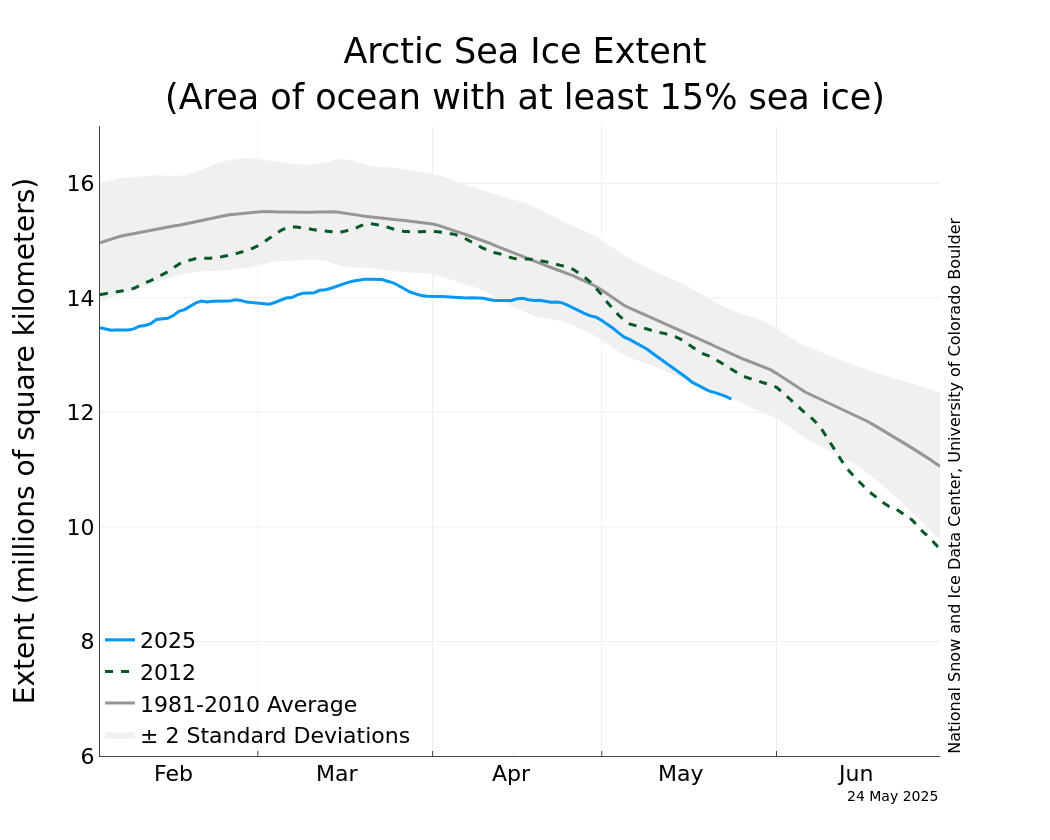
Then there is the lack of polar ice melt ...http://nsidc.org/data/seaice_index/images/daily_images/N_stddev_timeseries.png


More here
Why Joe Bastardi sees red: A look at Sea Ice and GISTEMP and starting choices


Friday, March 26, 2010

View from my "desk"

Seems like the same damn scene every day
Blue Sky, Sunshine ... Eagles, swans, geese, ducks
Deer may have moved "upland"

Saturday, March 13, 2010

Friday, March 12, 2010

The problem for this decade

We take them out of the hands of the folks on Wall Street, and put them in Washington.
I'll try to stay local ...

For the rest - the ability to think is critical.

Q&A with Wilbur Ross: Mr. Distress is ready to buy - Mar. 9, 2010:

"What are the big challenges for investors now?

Government intervention is one. Washington, D.C. is the new Wall Street. No significant financial transaction of any consequence occurs without it. About 90% of all mortgages are granted through Washington. Health-care reform would mean another 16% of the economy under more government supervision.

But there is no evidence that more regulation makes things better. The most highly regulated industry in America is commercial banking, and that didn't save those institutions from making terrible decisions.

The relationship between information and decision-making is a challenge. Everyone gets the same information at basically the same time, so the value of information has gone to zero. And there has not been proportionate growth in the investment community's ability to sort through it all. People spend so much time absorbing that they don't have time to understand what it means. This creates volatility.

For example, people suddenly decide Greece is the problem, and whack, the market is down 10%. If weeks from now people decide California is the problem, markets will move again. Everyone has known for over a year that both places are troubled. Why do we care now? How do we know that the problems of Greece or rescuing that country will make a difference in the economic landscape one way or the other?

That's why the value of expertise and the ability to interpret information will someday go to infinity. "

Thursday, March 11, 2010

Wow ... what an idea!

Low cost to free for chronic conditions if you stay on meds, high cost if you take options that are less proven.

Insurers test health plans that stress patient choices - USATODAY.com:

"Workers at a Portland, Ore., steel mill soon will be able to pick a new type of insurance that offers free care for some illnesses, such as diabetes or depression, but requires hefty extra fees for treatments deemed overused, including knee replacements, hysterectomies and heart bypass surgery.

The insurance, which will be offered by five different insurers in Oregon, is the most far-reaching and potentially controversial step in an effort by employers nationally to rein in medical spending by redesigning health benefits."

Wednesday, March 10, 2010

Fair warning

A parable about how one nation came to financial ruin. - By Charles Munger - Slate Magazine:

I just hope that our politicians and financial "brains" can get their heads out of their asses in time.

Oh yeah, and the voting public that expects a free ride.

Forward thinking

Do it before someone else does.

Global CIO Quick Take: Cisco TelePresence Shaping Next-Gen Hotels -- TelePresence:

" ...however, the real point is that Starwood has taken a huge leap in recognizing that the mission of its business hotels is to facilitate and enhance the flow of business, and not necessarily to limit that scope to having physical bodies inside its properties. This is a terrific bit of courageous and innovative thinking from Starwood, which clearly acknowledged that if new technologies and evolving customer preferences are going to have an impact on its revenue, better to go the cannibal route than have some outsider jump in and sweep up the new business while Starwood is left in the past."

Tuesday, March 09, 2010

Bradley’s ‘Imperial Cruise’

Last Sunday's read, a bit disjointed, sometimes repetitive, sometimes poorly edited (Denver being "west" of San Francisco.
That said, interesting insights.

Books of The Times - James Bradley’s ‘Imperial Cruise’ - Queasy Side of Roosevelt’s Diplomacy - Review - NYTimes.com:

"Mr. Bradley, the author of “Flags of Our Fathers,” does not simply cite Roosevelt’s egregious talk. He presents this much-ignored aspect of Roosevelt’s thinking with sharp specificity (“I am so angry with that infernal little Cuban republic that I would like to wipe its people off the face of the earth,” Roosevelt wrote in 1906) and then goes on to make a much more damaging point, angrily and persuasively connecting Roosevelt’s race-based foreign policy miscalculations in Asia. His thesis in “The Imperial Cruise” is startling enough to reshape conventional wisdom about Roosevelt’s presidency."

Monday, March 01, 2010

Health Care

First, listened to Warren Buffett on CNBC this AM
One topic was Health Care, and reform.
Reading between the lines - scrap the Dem's plan, go for cost controls first, then include the currently uninsured.

One comment was that his partner Charlie Munger read a piece in New Yorker by Dr. Atul Gawande, and was so impressed that he sent a check for $20K just because he was so impressed by the ideas.

A few min ago I picked up the Feb 22 issues having dog-eared this to read.
Agree 100% - fix costs first, then expand coverage.
Some is really really simple shit - like wash your hands before operating !

Make a List. Check It Twice - BusinessWeek

"Dr. Atul Gawande, a surgeon and New Yorker writer, had a huge impact on the health-care reform debate last summer when he wrote about wide regional disparities in Medicare spending. The article focused on McAllen, Tex., one of the country's priciest health-care markets. Gawande's conclusion—that doctors in McAllen charge more not because their patients are sicker or their care is better but simply because they can—caught the attention of reform forces across the nation. President Barack Obama had his entire staff read it.

Gawande may end up wielding influence again with his new book The Checklist Manifesto: How to Get Things Right. He starts the book by explaining how a simple five-item checklist in the operating room can dramatically reduce hospital-acquired infections, which kill 99,000 Americans a year."

and

Dr. Peter Pronovost, a critical care specialist at Johns Hopkins, devised his own operating room checklist in 2001. On a plain sheet of paper he wrote out five steps doctors and nurses in the OR should follow, all "no-brainers," as Gawande puts it: Wash your hands with soap, sterilize the patient's skin, put sterile drapes over the entire patient, wear a mask, gown, and gloves, and put a sterile dressing over incisions. Within a year the rate of infections related to IV tubes at the hospital went from 11% to zero. Only two such infections occurred over the next 15 months. Michigan instituted Pronovost's five steps in every hospital in the state, and within three months infections related to IV tube insertions dropped 66%.

Congress - PAY ATTENTION

Tuesday, February 16, 2010

More on "Peak Oil"

OK, so how long will oil last?

Saudi Arabia Says Peak Demand for Oil Is an ‘Alarm’ (Update2) - BusinessWeek:

"Oil demand in some developed industrialized nations is contracting, partly as a result of the economic slowdown. Those concerns are different from “peak oil” theorists who say oil production has already reached maximum levels and will inevitably decline."

Sunday, February 14, 2010

Endless Oil !?!?!

But but but ... we're suppose to be running out

Endless Oil - BusinessWeek

"Many analysts and industry executives have little doubt that there's plenty of oil in the ground. "Only about 32% of the oil [in reserves] is produced," says Val Brock, Shell's head of business development for enhanced oil recovery. Shell estimates 300 billion barrels and maybe more might be squeezed out of existing fields, much of it once thought beyond retrieval. Peter Jackson, IHS Cambridge Energy Research Associates' London-based senior director for oil industry activity, has reviewed data from the world's biggest fields. His conclusion: 60% of their reserves remain available."

Banking Should be BORING

Books: John Cassidy's How Markets Fail - BusinessWeek:

"Cassidy agrees with free-market advocates that the market performs wonders, but he believes its reach is limited. In that spirit, he favors greater government regulation of the financial-services industry. Although he doesn't dwell much on practical ideas for reform, he argues that it's necessary to tame Wall Streetplus or minus now that financiers have learned they can privatize profits during good times and socialize losses in bad. He admires the changes that came out of the Great Depression, such as the Glass-Steagall Act, which separated banking from investment banking. Even if current legislators aren't willing to go that far, banks must be required to keep more capital on hand and be given limits on how much debt they can accumulate, he says. He considers the proposed Financial Product Safety Commission a sensible idea. 'The proper role of the financial sector is to support innovation and enterprise elsewhere in the economy,' he writes. 'But during the past 20 years or so, it has grown into Frankenstein's monster, lumbering around and causing chaos.'"

What's VAT - likely new taxes

I expect that this will be coming ... maybe alternative to "income taxes"
And with pending demographic changes, it might work.

Economic View - What’s Sustainable About Obama’s Budget? - NYTimes.com:

"...unless the president revises his spending plans substantially, he will have no choice but to find some major source of government revenue. Ms. Pelosi’s suggestion of a VAT may be the best of a bunch of bad alternatives. Unfortunately, in this new era of responsibility, the president is not ready to face up to the long-term fiscal challenge."

On excessive reliance on debt

This spot on
And now we are paying the price
Not that a bit of leverage is all bad, but too much distorts the economy.

Executive Summary - BusinessWeek: Nov 30

"The U.S. tax code allows individuals to claim deductions on mortgage interest, up to $1 million, while corporations can write off all the interest on their debt. As a result, the economy suffers from what dismal scientists call a 'debt bias.' The tax break encourages homebuyers to make smaller downpayments and take out bigger mortgages. It also inflates housing prices, studies have shown. Similarly, the break makes it up to 42% cheaper for companies to take out debt than to issue equity, estimates the National Economic Council. While the tax system alone can't be blamed for the current slump, a recent IMF study found that tax distortions likely led American households and companies to take on much more debt than they would have otherwise."

and more here :

How the tax code encourages debt : The New Yorker:

"If it’s frustrating that the government is footing the bill to clean up the mess, it’s even worse that the government helped pay for the debt binge that created the mess in the first place, thanks to a tax system that actually subsidizes borrowing. Debt didn’t get dangerously out of scale because the system was broken. It got out of scale, in part, because the system worked."

The Year that really changed things

Not 1989, when the Berlin Wall came down ...
Was the Russian Empire a phantom ?

The Year the World Really Changed

Forget the fall of the iron curtain: the events of '79 matter more.

It may seem perverse to question the historical significance of the collapse of the Soviet empire in Mitteleuropa, and then the collapse of the Soviet Union itself. I suspect most Americans today share the Yale historian John Lewis Gaddis's view that 1989 saw the triumphant end of the Cold War, a victory achieved above all by President Ronald Reagan, though nobly assisted by Margaret Thatcher—despite her deep reservations about the unintended consequences of German reunification—and the Polish Pope John Paul II.

Yet for Princeton revisionist -Stephen Kotkin, the real story of 1989 is that of a cynical pseudo-revolution from above. Only high oil prices had kept the bankrupt Soviet empire alive during the 1970s, Kotkin argued in his 2001 book,
Armageddon Averted. Now, in his iconoclastic follow-up, Uncivil Society: 1989 and the Implosion of the Communist Establishment, Kotkin dismisses the role of Eastern European dissidents, much less Western leaders, in the Soviet collapse. No, Mikhail Gorbachev and other communist reformers wrecked their own system, partly out of naiveté, partly out of a cynical desire to grab the system's few valuable assets in what became the scam of the century: the privatization of the Russian energy industry. For the wilier members of the nomenklatura, the road from KGB apparatchiki to Gazprom biznesmen was a remarkably short, though crooked one.

Because it's there

Moves like this keep pushing "Peak Oil" further and further out

Why Oil Majors Are Coming Back to Iraq - BusinessWeek: "Global oil companies are finding it harder to resist the huge volume of crude in Iraq, but their change of heart could increase tensions in OPEC"

Grrrr

Although I suppose it's no more boneheaded than many Pentagon Programs - this stuff still ticks me off.

A Long Bet on Electric Cars - BusinessWeek:
"Not every government investment is a sure bet. The question is how much risk taxpayers should shoulder. The feds have put $465 million into Tesla, but it has raised only $300 million and change in private capital. And the U.S. has invested five times as much in Fisker as private investors. Rogers says Fisker must raise more money to tap the credit line, but debt will still account for 70% of the company's funding. So the risk, and burden if these companies fail, will mostly rest with U.S. taxpayers."

Saturday, February 13, 2010

More Toyota stuff

While I suspect that the company indeed has some problems, likely on the systems/software side, the press has a history of sensationalizing supposed defects... at least back to the Audi 5000 "unintended acceleration" BS

The Real Scandal Behind the Toyota Recall - BusinessWeek

But the press is not responsible, all they need to do is sell ads/ad time.

Note that once upon a time, I watched 60 Min on CBS, until they ran the Audi story - and it was such obvious BS.

Try this experiment - best to do it in a dry parking lot, with no other cars around - in case you screw up.
Stand on the break pedal with your left foot, and try to accelerate with your right - bet you don't launch like a bat out of hell ... this was the situation that Audi was accused of.
Simple answer - drivers were confused as to what pedal they were pressing.

Tuesday, February 09, 2010

Toyota - it's not really our fault

It's the floor mats, it's the American sub-contractor's pedal.
Well, maybe not.
Maybe it's faulty software - and THAT indeed is a problem.

"The sticky accelerator is definitely a distraction and may not be the whole story," said Rebecca Lindland, an automotive analyst at IHS Global Insight. Toyota is "addressing some of the problem. I do think that the industry in general is questioning whether they are addressing all of the problems and the right problems."


Pedal Maker Says It's Not to Blame - WSJ.com: "Government regulators now believe that more than a third of the vehicles involved in two massive recalls at Toyota Motor Corp. have no apparent connection to uncontrolled acceleration linked to hundreds of reports of serious crashes and more than a dozen fatal accidents.

The gas pedals in question get stuck only at low speeds close to idle, according to CTS Corp., the Indiana-based maker of the pedals. A federal official who was briefed on the matter confirmed the problem occurs when vehicles are moving at low speeds and isn't believed to make cars accelerate out of control."

Sunday, January 24, 2010

Hello part two

Harold Ford Jr. ex representative from Tennessee - Dem

Cut taxes, back off on health care, east up on immigration reform and ... address the deficit
Holy Crap, does Pelosi know about this ?

Op-Ed Contributor - Democrats, Get Down to Business - NYTimes.com:

"Here are four simple steps we must take immediately to put us, and the nation, on a better course:

First, cut taxes for businesses — big and small — and find innovative ways to get Americans back to work. We can start by giving any companies that are less than five years old an exemption from payroll taxes for six months; extending the current capital gains and dividend tax rates through 2012; giving permanent tax credits for businesses that invest in research and development; and reducing the top corporate tax rate to 25 percent from 35 percent.

America’s primary job-creating machine — the private sector — needs to be rejuvenated. Democrats must lead now on job creation or risk forfeiting Congressional majorities in November.

Second, we should pass a more focused health reform bill that restructures current health care costs before spending more, prohibits insurance companies from denying coverage for pre-existing conditions, enacts responsible reform on malpractice suits and extends health coverage to all children. And we must allow states to have input into the expansion of health coverage, as they will have to pay for much of the reform themselves.

This program isn’t all that Democrats wanted from health care reform right now, but it’s what the country wants. And it’s what the country can afford.

Third, we should reform our immigration policy to ensure that those who contribute to our economy, especially foreign math and science graduates of American universities, have a clear path to citizenship.

Finally, we need to address budget deficits now rather than waiting for some ideal future economic situation. It’s a good sign that the Obama administration is following the advice of Senators Kent Conrad of North Dakota, Evan Bayh of Indiana and other Democratic fiscal pragmatists who embrace the idea of a bipartisan commission to recommend spending cuts to rein in deficit growth. But we must be sure that the administration and Congress heed the commission’s advice."

Rocket Science works

Until it doesn't

The Quants: Formula for a Meltdown - WSJ.com

Again ... why we need something like Glass Siegle

Hello ...

Chasing the wrong issues

We'll note the Senate vote in Mass.
Independents rule and have ruled the Dems wrong

Op-Ed Columnist - They Still Don’t Get It - NYTimes.com: "While the nation was suffering through the worst economy since the Depression, the Democrats wasted a year squabbling like unruly toddlers over health insurance legislation. No one in his or her right mind could have believed that a workable, efficient, cost-effective system could come out of the monstrously ugly plan that finally emerged from the Senate after long months of shady alliances, disgraceful back-room deals, outlandish payoffs and abject capitulation to the insurance companies and giant pharmaceutical outfits."

Thursday, January 07, 2010

Electric chic gets quicker-straight line

I'll conced that they can have great acceleration
Electric motors develop maximum torque at zero RPM, so of course they should be a blast in a straight line, but then what?
Battery storage = mass, which affects handling
2010 Tesla Roadster Sport: Electric chic gets quicker--it's EV with attitude

"How does it work? As we said, in a straight line, it's thrilling. Launching up on-ramps and into open spaces anywhere traffic allows will make you downright giddy. But with nearly 1,000 pounds of batteries inside, the Tesla understeers in corners. It does so less at lower speeds, and we know that you can make just about anything plow into a corner if you enter it too fast. But as you approach what might be called spirited driving, the car feels all of its 2,723 pounds. If you've driven any of the Lotus roadsters from which the Tesla traces its basic structure, you will really notice the extra weight. But if you haven't, chances are you'll find this to be a sprightly ride. And it's definitely the best-handling electric car in the world."

Bottom line : Physics rules

Saturday, January 02, 2010

Kabuki

Interesting stuff on HSA, turf wars and the like

Seems to confirm my opinion that the TSA is just Kabuki
A shot to make the public think that the government is doing something about air travel safety

The Homeland Secretary’s Job Security - Opinionator Blog - NYTimes.com

Just drop any pretense and profile

Unintended Consequences

Not allowing the market to clear just prolongs the problem

Mortgage Modifications Are Seen as Adding to Housing Woes - NYTimes.com

"Only after banks are forced to acknowledge losses and the real estate market absorbs a now pent-up surge of foreclosed properties will housing prices drop to levels at which enough Americans can afford to buy, he argues.

“Then the carpenters can go back to work,” Mr. Katari said. “The roofers can go back to work, and we start building housing again. If this drips out over the next few years, that whole sector of the economy isn’t going to recover.”

Monday, December 21, 2009

Sunday, December 20, 2009

Ouch!

Discovered Ed Youngblood's MotoHistory
Great stuff

One piece - Cook Neilson interview
Motohistory.Net - Featured Story - Cook Neilson Remembers - Page 2:

This one on a particular dangerous bike.
I was pitched off of one and manged to collect some nasty scars
Both palms gone, right forearm, right nipple ground down (I was dumb, wearing a work shirt, sleeves rolled up, no gloves)
Front fender shook loose, and grabbed the front tire... I went down ... hard.

"And what we were doing WAS dangerous. It seemed that we were always a staffer or two short; it seemed that we had a charge account at the Westlake Village Hospital. We lost Dave Hawkins for a good long while; same with Dale Boller; same with me. I remember one time, after we'd published a particularly scathing road test of an H2 Kawasaki 750, I decided that I'd show the Kawasaki people exactly what I was talking about with regard to handling instability. There was this one corner on Mulholland Highway that was perfect for testing: fast and bumpy (it was on a section of that highway that became known as Racer Road). The Kawasaki guys showed up; I showed up. So I was whistling this 750 through this one very high-speed turn when it started to wobble. When that happened, the suspension started to oscillate, then the muffler on the left side started banging off the ground, then it high-sided me through a barbed wire fence and I ended up in the hospital ('Charge it!') for a little while. I certainly hadn't intended to be that dramatic, but the point was, as far as I was concerned, Kawasaki was selling a bike to the public that was fundamentally unsound, and we wanted them to either fix it, or get rid of it."

Monday, December 14, 2009

Worth Sharing

Inspiration
click here

Interesting move

Expanding interest in Natural Gas

With XTO Deal, Exxon Expands Natural Gas Holdings - NYTimes.com

Note that
1) Boone Pickens has been pushing Natural Gas as "bridge" to non-carbon fuels, and esp. for over the road trucks (issues of storage preclude use for family car/SUV

2) Exxon is partner in the world's largest LNG plant which is finishing up in Qatar, which will be the largest man made structure in the world.

3) there are some arguments that NatGas is nearly inexaustable

Sunday, December 13, 2009

Timing

Passing through MSP airport tonight, we spotted an accenture poster with Tiger Woods, not this one, it was him lining up a putt, yellow background with text about thinking vs doing ... we got a chuckle.
Then caught the evening news ... accenture dropped Tiger and pulled all ads.


Saturday, December 12, 2009

Informed Development

Since "Smart Grow" may carry connotation that opponents are "not smart" what about the term "Informed Development" ... trying to be more inclusive and collaborative

Thursday, December 10, 2009

Maybe it's just Magic

Not going to hold my breath.
Some basic physics : more electrons = more protons and neutrons = more mass.

Skepticism Persists as Nissan’s Ghosn Leads Charge Into EV Age: "According to Ghosn, the Leaf's 100-mile (160-km) range covers 90% of the daily driving needs in Japan and most other major markets. The problem is that other 10%.

“Buyers would basically be paying the price of a Lexus for a second car,” one Nissan official admits.

While the basic story line is right, Ghosn has omitted a few details that could make the road ahead a little bumpier – namely, that the Leaf’s 100-mile range is achieved without engaging the car’s air-conditioner and heater, which knocks off 30%. Also, the life of the battery for automotive use is estimated at only four to five years."

Wednesday, December 02, 2009

Paleolithic Europe

Interesting piece on early settlements, pre-written language in the southeast of Europe

NYTimes
A Lost European Culture, Pulled From Obscurity

Before the glory that was Greece and Rome, even before the first cities of Mesopotamia or temples along the Nile, there lived in the Lower Danube Valley and the Balkan foothills people who were ahead of their time in art, technology and long-distance trade.

For 1,500 years, starting earlier than 5000 B.C., they farmed and built sizable towns, a few with as many as 2,000 dwellings. They mastered large-scale copper smelting, the new technology of the age. Their graves held an impressive array of exquisite headdresses and necklaces and, in one cemetery, the earliest major assemblage of gold artifacts to be found anywhere in the world.

The striking designs of their pottery speak of the refinement of the culture’s visual language. Until recent discoveries, the most intriguing artifacts were the ubiquitous terracotta “goddess” figurines, originally interpreted as evidence of the spiritual and political power of women in society.

Continue here

Could it be related to "Noah's Flood"

Experts Face Off on 'Noah's Flood' - The New York Times

Two marine geologists from Columbia University in 1996 advanced the idea that a flood of water from the Mediterranean, rushing through the Bosporus with the force of 20 Niagaras, entered the Black Sea 7,600 years ago. In months, at most two years, the Black Sea rose, inundated surrounding plains and attained its present dimensions.

As a consequence, the geologists suggested, people in the region had to flee, and this could explain the rapid spread of early agriculture into eastern and northern Europe. It was even possible, they said, that the cataclysm became a part of folk memory, inspiring the Babylonian flood myth in the epic of Gilgamesh and, in time, the biblical story of Noah.

Monday, November 30, 2009

Problems with Gold

Good summary
And gold is rather sterile : no yield, cost to own (store, insure)

Buttonwood: Paper promises, golden hordes | The Economist:

"A gold standard clearly protects the interest of creditors since it ties the value of money to a scarce resource. A government cannot create new gold. But the law of volatility applies. If you fix one part of the economic system, trouble has to show up elsewhere. When countries on the gold standard suffered a shock they had to let the real economy, rather than their currencies, take the strain.

The Depression showed the problem with this approach. In theory businesses and workers should quickly adjust to a deflationary shock, by slashing their prices and wages. In practice they were slow to adjust and the results were bankruptcies and mass unemployment. Democratically elected governments proved reluctant to stand by and let this happen. By going off the gold standard and allowing their currencies to fluctuate, they protected the interests of the bulk of their populations at the expense of creditors.

Dropping gold did work. A recent paper* by Barry Eichengreen of the University of California, Berkeley, and Douglas Irwin of Dartmouth College found that countries that abandoned gold not only had shorter recessions but were also less inclined to raise tariffs than those countries that retained the link."

Sunday, November 29, 2009

Education

Fareed Zakaria's GPS
The thesis is spot on - don't teach specific skills, but how to to acquire skills

CNN.com - Transcripts:

"ZAKARIA: And we are back with Eric Schmidt, the CEO of Google.

You know, I wonder about how we educate kids. I watch, you know, my kids go to school. And one of the things they have to do with great -- what takes a lot of time is to learn to spell properly.

Is it worth teaching people how to spell properly in a world in which every -- there's spell checks everywhere?

SCHMIDT: You can imagine education changing a lot. After all, when I was growing up, they forced me to memorize everything. But now, why do I need to remember that? I just need to learn how to search for it."

Saturday, November 28, 2009

Transparency

Hacked E-Mail Data Prompts Calls for Changes in Climate Research - NYTimes.com:

"Some prominent climate scientists are calling for changes in the way research on global warming is conducted after a British university said thousands of private e-mail messages and documents had been stolen from its climate center.

The scientists say that the e-mail messages, which have circulated on the Internet and which disclose the inner workings of a small network of climatologists who chart the planet’s temperature, have damaged the public’s trust in the evidence that humans are dangerously warming the planet, just as many countries are poised to start reining in greenhouse gas emissions.

“This whole concept of, ‘We’re the experts, trust us,’ has clearly gone by the wayside with these e-mails,” said Judith Curry, a climate scientist at Georgia Institute of Technology."

Politics posts

Several links dealing with state of the Obama Administration

Is the electorate getting disillusioned?

Note that source is Rupert Murdock's Wall St. Journal, so take with requisite dose of salt

Strains in Party Threaten Democrats' Plans - WSJ.com (note : Democrats often seem strained to acted together - see Will Rogers "I'm not a member of any organized political party, I'm a Democrat!")

More damning:

Fred Barnes: Why Obama Isn't Changing Washington - WSJ.com:

"First, Mr. Obama misread the meaning of the 2008 election. It wasn't a mandate for a liberal revolution. His victory was a personal one, not an ideological triumph of liberalism. Yet Mr. Obama, his aides and Democratic leaders in Congress have treated it as a mandate to radically change policy directions in this country. They are pushing forward one liberal initiative after another. As a result, Mr. Obama's approval rating has dropped along with the popularity of his agenda."

"Second, Mr. Obama misread his own ability to sway the public. He is a glib, cool, likeable speaker whose sentences have subjects and verbs. During the campaign, he gave dazzling speeches about hope and change that excited voters."

"Third, Mr. Obama misread Republicans. They felt weak and vulnerable after losing two straight congressional elections and watching John McCain's presidential bid fall flat. They were afraid to criticize the newly elected president. If he had offered them minimal concessions, many of them would have jumped aboard his policies. If that had happened, the president could have boasted of achieving bipartisan compromise on the stimulus and other policies. He let the chance slip away."

On the lead domestic program, health care:

David S. Broder - David Broder: Fears of health-reform cost are justifiable:

"By David S. Broder
Sunday, November 22, 2009

It's simply not true that America is ambivalent about everything when it comes to the Obama health plan.

The day after the Congressional Budget Office (CBO) gave its qualified blessing to the version of health reform produced by Senate Majority Leader Harry Reid, a Quinnipiac University poll of a national cross section of voters reported its latest results.

This poll may not be as famous as some others, but I know the care and professionalism of the people who run it, and one question was particularly interesting to me.

It read: 'President Obama has pledged that health insurance reform will not add to our federal budget deficit over the next decade. Do you think that President Obama will be able to keep his promise or do you think that any health care plan that Congress passes and President Obama signs will add to the federal budget deficit?'

The answer: Less than one-fifth of the voters -- 19 percent of the sample -- think he will keep his word. Nine of 10 Republicans and eight of 10 independents said that whatever passes will add to the torrent of red ink. By a margin of four to three, even Democrats agreed this is likely."

The executive branch is not all that strong, and congress was allowed to take over the agenda. Furthermore, I wonder if "campaign style" really works oversees, or do you have to put the foreign service to work laying the groundwork.

Peggy Noonan: He Can't Take Another Bow - WSJ.com:

"An icon of a White House that is coming to seem amateurish."

"From journalist Elizabeth Drew, a veteran and often sympathetic chronicler of Democratic figures, a fiery denunciation of—and warning for—the White House. In a piece in Politico on the firing of White House counsel Greg Craig, Ms. Drew reports that while the president was in Asia last week, "a critical mass of influential people who once held big hopes for his presidency began to wonder whether they had misjudged the man." They once held "an unromantically high opinion of Obama," and were key to his rise, but now they are concluding that the president isn't "the person of integrity and even classiness they had thought.

She scored "the Chicago crowd," which she characterized as "a distressingly insular and small-minded West Wing team." The White House, Ms. Drew says, needs adult supervision—"an older, wiser head, someone with a bit more detachment."

and

"Just as stinging as Elizabeth Drew on domestic matters was Leslie Gelb on Mr. Obama and foreign policy in the Daily Beast. Mr. Gelb, president emeritus of the Council on Foreign Relations and fully plugged into the Democratic foreign-policy establishment, wrote this week that the president's Asia trip suggested "a disturbing amateurishness in managing America's power." The president's Afghanistan review has been "inexcusably clumsy," Mideast negotiations have been "fumbling." So unsuccessful was the trip that Mr. Gelb suggested Mr. Obama take responsibility for it "as President Kennedy did after the Bay of Pigs
."

He added that rather than bowing to emperors—Mr. Obama "seems to do this stuff spontaneously and inexplicably"—he should begin to bow to "the voices of experience" in Washington.

When longtime political observers start calling for wise men, a president is in trouble."

Then the more "liberal" NYTimes chimes in:
Editorial - Diplomacy 101 - NYTimes.com:
"Mr. Obama’s own credibility is so diminished (his approval rating in Israel is 4 percent) that serious negotiations may be farther off than ever.

Peacemaking takes strategic skill. But we see no sign that President Obama and Mr. Mitchell were thinking more than one move down the board. The president went public with his demand for a full freeze on settlements before securing Israel’s commitment. And he and his aides apparently had no plan for what they would do if Prime Minister Benjamin Netanyahu said no.

Most important, they allowed the controversy to obscure the real goal: nudging Israel and the Palestinians into peace talks. (We don’t know exactly what happened but we are told that Mr. Obama relied more on the judgment of his political advisers — specifically his chief of staff, Rahm Emanuel — than of his Mideast specialists.)"

Monday, November 23, 2009

Racing

Took some time off and posted recollections from "racing daze"

1977 I'd put together a race team, went to Ohio and with combination of planning and a bit of luck started on our way to a National Championship, and Endurance racing at that.
With endurance racing, if it breaks, you fix it, if rider crashes, you fix it.
You keep racing.
Most pavement racing runs from 30 to 60 min, we'd run 3-6-12 hours, even a pair of the ultimates - 24hrs, once around the clock.

Transcriptions and notes: Racing Recollections - Google Docs

1978 we moved into the new AMA Superbike class, modest results, then worked with other riders and teams for a few years, but now had a family and would not spend as much time on the road.

Besides, it's damn hard to top a National Championship.

Later, I was a guest at a SAE (Society of Automotive Engineers) dinner, where the keynote speaker was the head of Porsche and he spoke of the importance of racing in teaching values to young engineers.

With winning the only object, you could :
build the best car, but if you couldn't make it to the starting line - NFG
build the fastest car, but if you couldn't make it to the finish line - NFG
Simply - no excuses, no gray, it's black and white - win or loose

You apply yourself, try to anticipate as many contingencies as possible and plan for alternative actions, if something breaks, can you fix it ... quickly?

Wednesday, November 18, 2009

Hype

He all but admits that he's all about BS and Hype
I just wonder if he really does drink his own kool-aid

Trump on Trump: Testimony Offers Glimpse of How He Values His Empire - WSJ.com:

"'My net worth fluctuates, and it goes up and down with markets and with attitudes and with feelings, even my own feeling,' he told lawyers in the December 2007 deposition."

and

"Mr. Trump was asked whether he has ever exaggerated in statements about his properties. "I think everybody does," he said in the deposition. "Who wouldn't?"

A follow-up question: Does that mean he inflates the value of his properties in general, nonfinancial public statements? "Not beyond reason," he said in the testimony.

The deposition reveals he told his bankers and New Jersey casino authorities in 2004 and 2005 that he was worth approximately $3.6 billion. In 2005, Deutsche Bank evaluated his net worth as part of underwriting a $640 million construction loan it made to Mr. Trump's Chicago condo and hotel project. The bank said his worth was $788 million, according to information presented by the author's lawyers present during Mr. Trump's deposition."

Thursday, November 12, 2009

More on the Housing Bubble

From an insider

Edward Pinto: Acorn and the Housing Bubble - WSJ.com

Lays out Congressional influence on Fannie and Freddie to lend at all costs (and what costs we've had)

"Fannie and Freddie acquired $1.2 trillion of loans from banks and other lenders from 1993 to 2007. This amounted to 62% of all such conventional home purchase loans with a down payment of 5% or less that were originated nationwide over the same period.

Fannie and Freddie also acquired $2.2 trillion in subprime loans and private securities backed by subprime loans from 1997 to 2007. Acorn and the other advocacy groups succeeded at getting Congress to mandate "innovative and flexible" lending practices such as higher debt ratios and creative definitions of income. And the serious delinquency rate on Fannie and Freddie's $1.5 trillion in high-risk loans was 10.3% as of Sept. 30, 2009."


Mr. Pinto was the chief credit officer at Fannie Mae from 1987 to 1989. He is currently a consultant to the mortgage-finance industry.

Monday, November 09, 2009

Who Killed the Electric Car?

Maybe, just maybe they just don't work

"The electric car is like a 4,000 pound Chevette with a single cylinder engine and a one gallon gas tank... that takes all night to fill."

Fiat pulls the plug on Chrysler's electric car program -- DailyFinance

"The Fiat decision to scuttle its American subsidiary's electric cars could signal the industry shakeout is already underway. One major problem is the inability of battery makers to bring down prices or increase performance quickly enough to allow the electric roadster to compete on equal footing with the gas slurping status quo. To be fair, Marchionne does plan on making some electric and hybrid cars. But he expects those types of vehicles to total less than three percent of Fiat's total production runs by 2014, a paltry 60,000 or so vehicles. In a nutshell, 440,000 electric cars just died and the toll will likely continue to rise."

Sunday, November 08, 2009

Reflections on the Tues Vote

Both parties should be careful, the public may well be pissed at all politicians.

Peggy Noonan: The Rose Garden Path

"The White House has gotten bad at listening, and now it’s paying the price."


The voters are more concerned about jobs than the health care debate.

"The path the president and the Democrats of Congress chose has been called the big-bang strategy. In January 2009 they had the big mo and could claim a mandate. The strategy was to give their first year to 2008 domestic policy pledges: health-care reform, climate change, empowering unions, etc.But reality came in and stole the mandate, stopped the mo.

The reality is that over the past 10 months the great recession settled in, broadened its presence, and became part of the national landscape. It became the big bad thing for normal people."


and Frank Rich from the other side:

Op-Ed Columnist - The Night They Drove the Tea Partiers Down - NYTimes.com: "Unemployment ranked ahead of the deficit and health care as the No. 1 pocketbook issue in the survey, with 81 percent saying the Obama administration must take more action.

The tea party Republicans vanquished on Tuesday have no jobs plan. They just want to eliminate all Washington spending — a prescription that didn’t go down too well in New York’s 23rd, where the federal government has the largest payroll. The G.O.P. establishment’s one-size-fits-all panacea is tax cuts — thin gruel for those with little or no taxable income. The administration’s answer is the stimulus, whose iffy results so far, it argues, can’t be judged this early on.

Fair enough. But a year from now the public will register its verdict in any event. Meanwhile, both parties have their own delusions, not the least of which is the Republicans’ conviction that Tuesday was a referendum on what Obama has done so far. If anything, it was a judgment on just how much he has not."

and

American elections: The shine coming off | The Economist:

"Two broad points have emerged from this election night. The first is that the Democrats are now considered to own the economy—trying to blame George Bush for the country's economic ills, as Mr Obama tried to do in New Jersey, will not wash with swing voters. In Virginia, moderates and independents warmed to Mr McDonnell's themes of reduced taxes. The economy will doubtlessly improve before next year's mid-term elections, but Mr Obama's ambitions for government spending trouble many centrists.

The other point is that Sarah Palin’s broadside against the Republican candidate in upstate New York has established her beyond doubt as the leading player in Republican politics, much to the chagrin of party grandees. There is nothing new about conservative insurrection in the party. The contest in New York is somewhat reminiscent of Pat Buchanan's rebellion against the party establishment in the New Hampshire primary in 1992, except that conservatives have ditched their pitchforks for iPhones. But the danger for the Republicans remains the same now as then; the pursuit of an ideologically pure conservatism will turn away moderates and independents. The Republicans lost the 1992 presidential election, and they lost the 23rd congressional district in upstate New York on Tuesday."

It's Complicated

Good analysis of strategic patience
We may be in Iraq and Afghanistan for a very long time

U.S. Amb. Ryan Crocker on Iraq and Afghanistan Newsweek.com

Saturday, November 07, 2009

Population(s)

An "older" world needs some policy changes
In short, the idea of retirement needs to be "retired"
As long as people are productive, they should contribute to society

Demographics: Greying globe | The Economist:
The Age of Aging: How Demographics are Changing the Global Economy and Our World,
by George Magnus

"This book falls firmly into the last category. It provides a clear, sober and well-written analysis of the problem, both in developed and developing countries, and runs through the options for heading off the worst effects. The biggest part of the solution lies in expanding the shrinking band of workers, mainly by getting people to retire later and persuading even more women to take up paid employment. At the same time more productivity will have to be squeezed out of the labour force that remains. And people will have to be persuaded to save a lot more for their old age."

A report on aging populations :
A survey of ageing populations: : A slow-burning fuse | The Economist:

But there is a bright side, population growth slows
Fertility and living standards: Go forth and multiply a lot less | The Economist:

"Lower fertility is changing the world for the better"

Maybe I AM a Conservative

If the following defines a conservative ...

Looking for a True Conservative - Forbes.com:

A true conservative today should stress construction, encouragement, moderation and understanding instead of destruction, prohibition, extremism and slogans. A conservative thinks in terms of countless minor corrections and improvements based on experience and experiment rather than in terms of a universal, uniform solution based on theory and enforced by inflexible law.

"A conservative, in the best sense, sees the world and its inhabitants as an interdependent organism, comprising innumerable local communities and territories, each adapting to particular conditions. A conservative is someone who goes with the grain of humanity and the nature of the physical world, rather than trying to regiment and fashion a utopia through force of law. And, needless to say, an acceptable conservative is not one who thinks all the answers are obvious but is a modest person who admits that problems are not easily solved, that perfection is unattainable in this world and that it is often necessary to admit mistakes, change one's mind and start again."