Headed up Rt 1 for Monterey ...

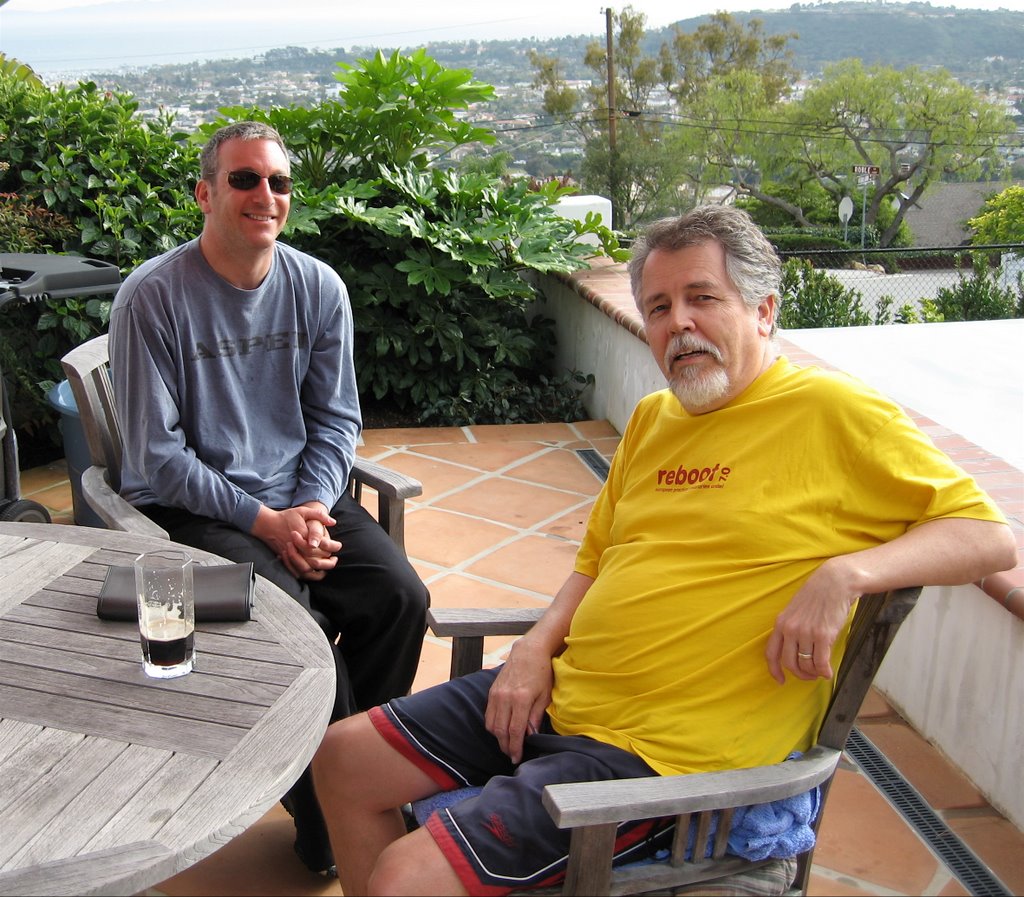 Elliot and Doc next to Doc's famous "infinity pool"
 We paid a visit to Venice Beach, home of folks my sister calls "wing nuts"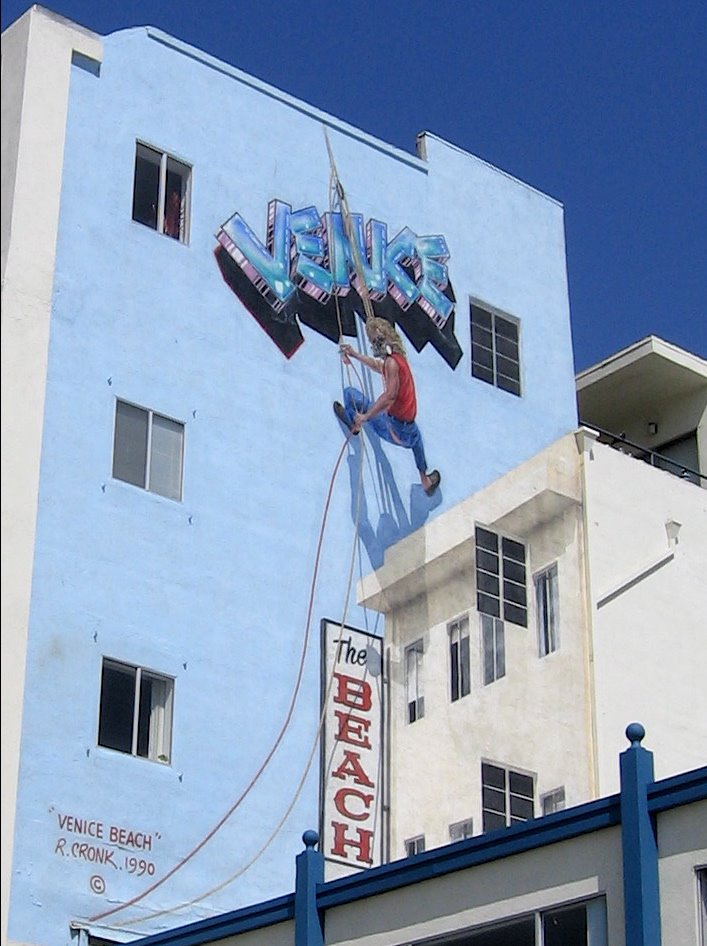


 Shot of CVN 74 (John Stennis) left and CVN 68 (Nimitz) right from the deck of the Midway.
 Spent the day at the zoo.
 Only got ice on the lake a few of weeks ago (Feb 11th)
 All well and good.
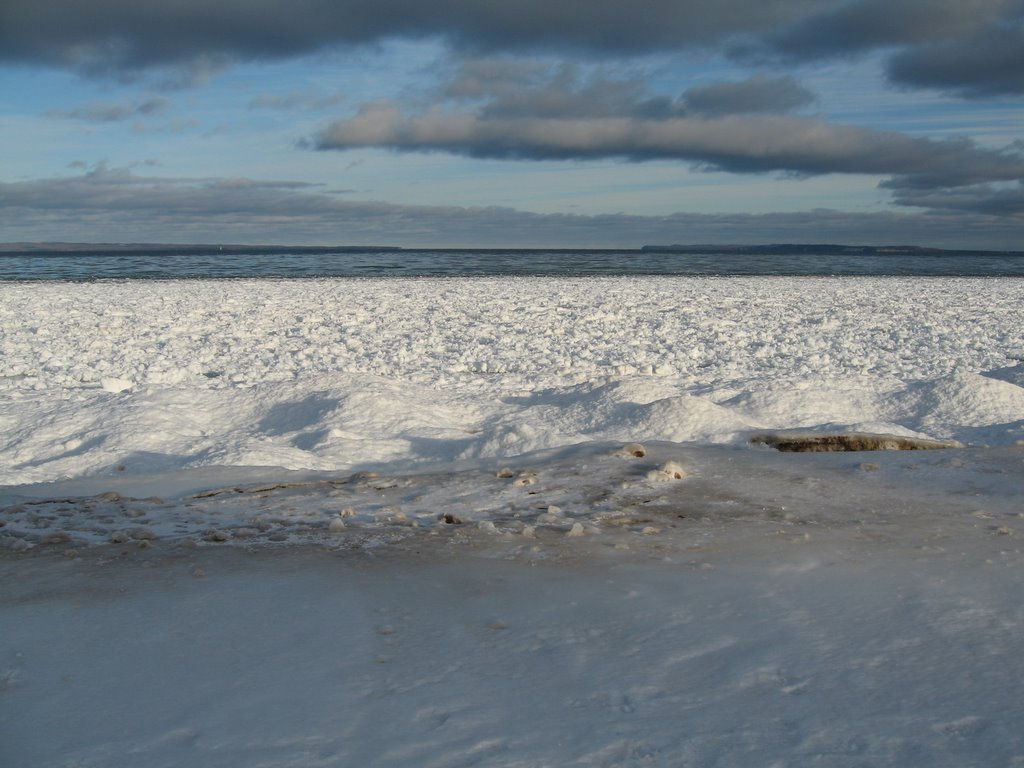 About 8:30 AM on the 1st
 Was driving around on errands
 Occasional clearing

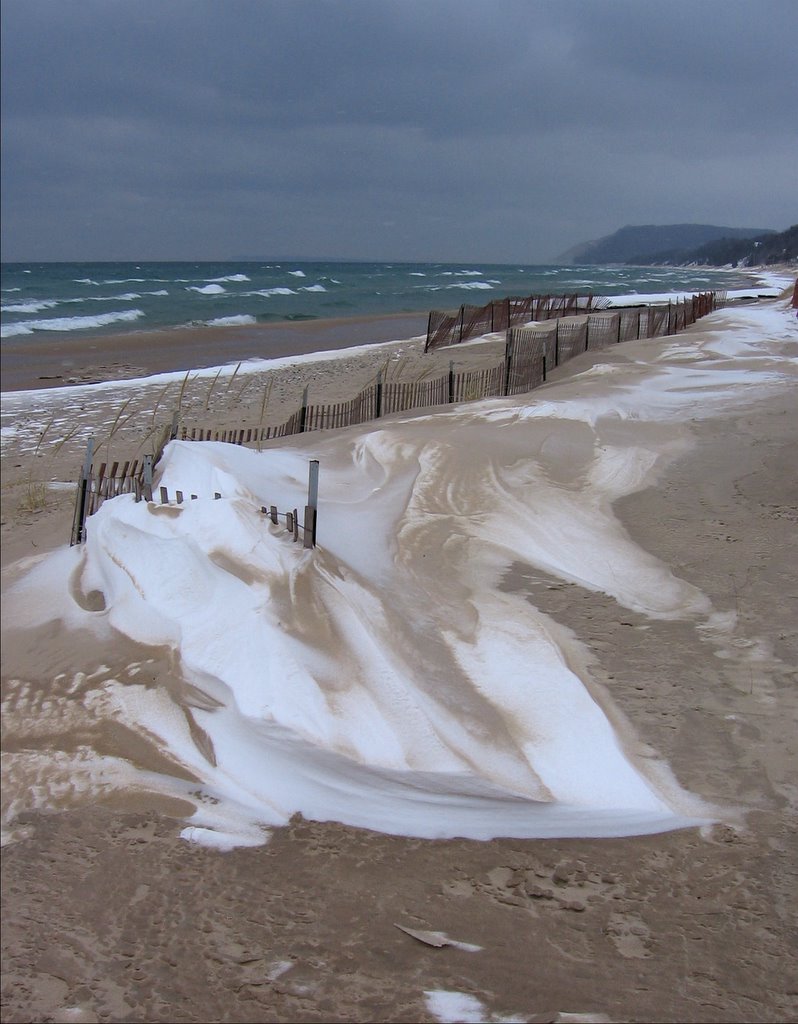
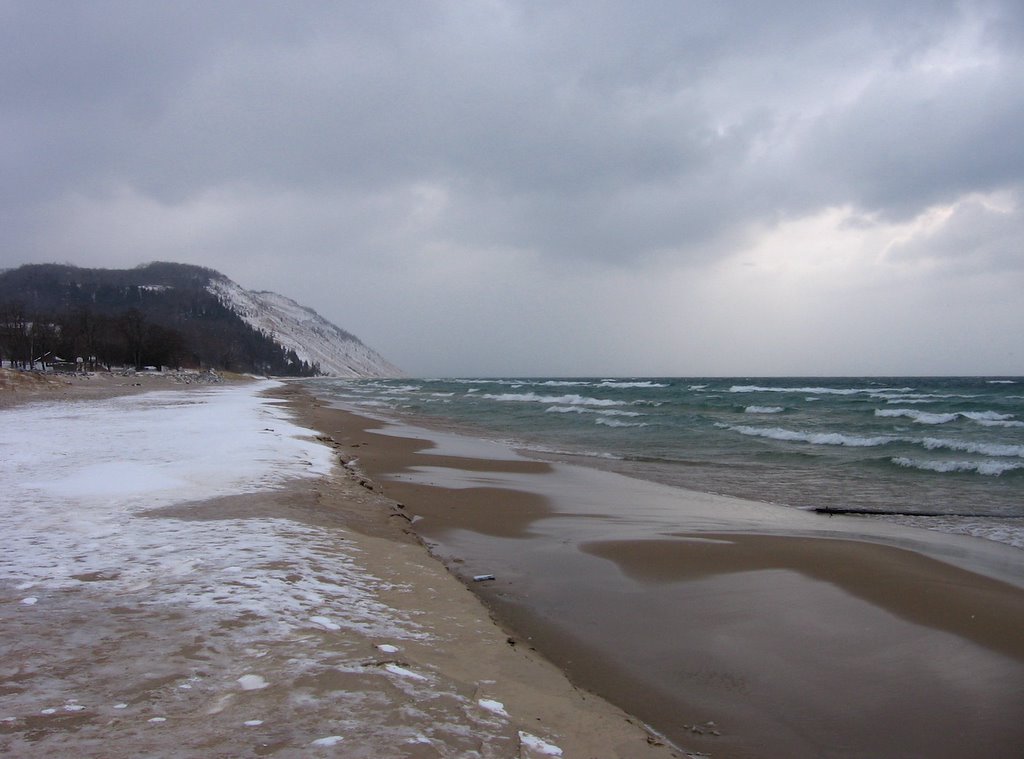 Brisk day, Empire Beach and Storm Hill. Only in the 20's but the wind out of the north brings it down.
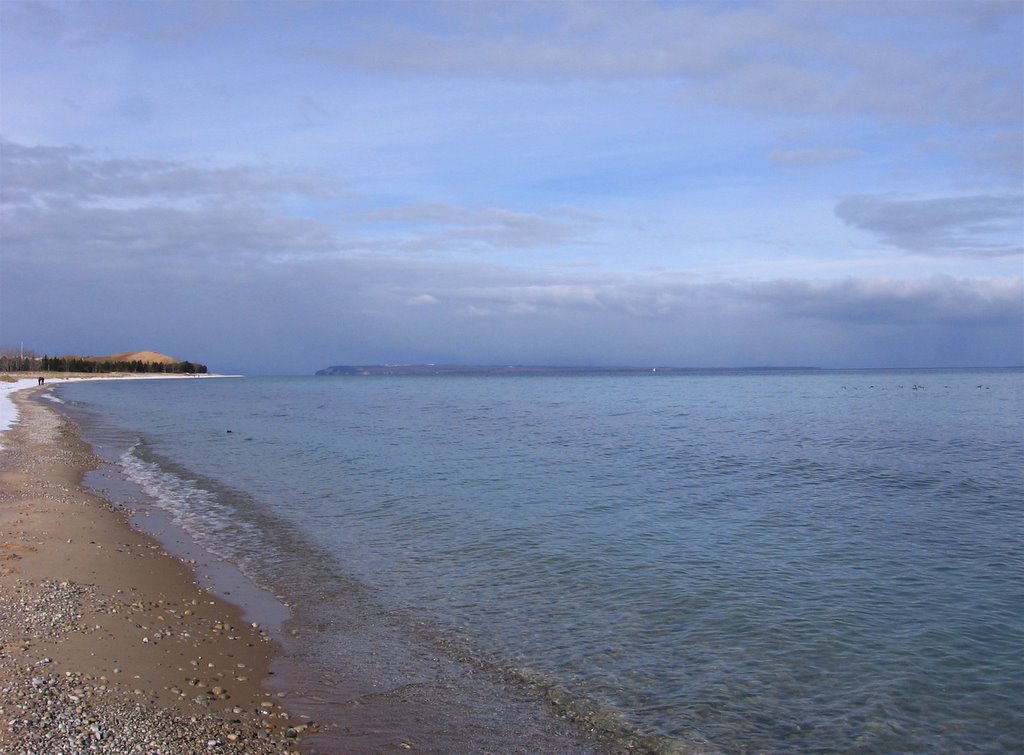 With a nod to the late, great Peggy Lee, what a difference a day makes.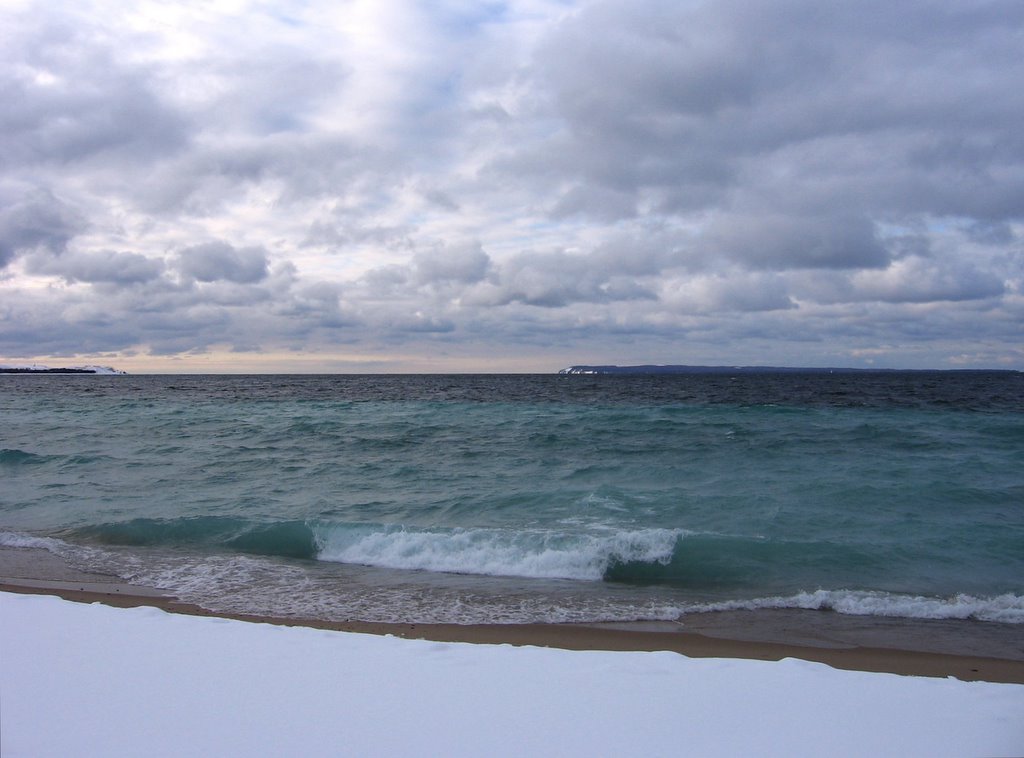

I take issue with the Mel J. Ravitz Other Voices piece published Jan. 15 in The Ann Arbor News. Ravitz characterizes General Motors Corp. as targeting its own workers and retirees regarding pensions and health care costs.
Let us look at some facts.
In 1948-50, GM first began to offer health care and retirement benefits to its represented workers. The retirement age was 65; life expectancy was 68. There were about 7.2 workers age 20-64 in the U.S. workforce for each person over 65. The proportion now is less than 5:1 and will drop below 3:1 within the next 20 years.
There were no such things as MRIs, CT scans, angioplasties, pacemakers, AIDS, organ transplants, or computerized prostheses. Total U.S. health care expenditures in 1950 were about $70 billion and a modest percentage of GDP; in 2003 that had risen to $1.7 trillion and a shocking 15.3% of GDP.
Ravitz goes on to suggest that if only GM had educated Congress, our lawmakers would have taken the burden off the shoulders of the corporation and distributed that burden equitably over all taxpayers.
History offers little record of such congressional initiative.
The fact that workers are living dramatically longer in retirement and utilizing new and more costly medical interventions both during and beyond their productive years does not reflect poorly on GM, the UAW, or Congress. However, the fact pattern does change the funding assumptions necessary to provide benefits. If the life span in retirement grows from both ends through earlier retirement and later death additional funds must be obtained.
If that funding were to come from shorting new product development, skimping on product content or abandoning plant investment and maintenance, the impact on GM's ability to produce the desirable products essential to success would be very negative.
If GM were in a position to increase its margins by raising prices, perhaps it would be able to continue indefinitely to provide more-costly benefits for longer life spans. However, those margins are pressed by competitors who do not pay pensions and health care for retirees and families based on U.S. cost levels. Even those transplant manufacturers employing U.S. assemblers have the advantage of a younger workforce and negligible retiree population.
I agree with Ravitz that we need a more balanced approach to providing health care and to funding retirement living. I do not think he has made the case that GM is somehow the villain. I see GM as a company struggling mightily to meet its obligations to all its stakeholders. GM products have shown dramatic improvements in recent years, and the continued success of GM has been instrumental to the prosperity of people in Southeast Michigan as no other public or private organization.
As I see it, GM has not targeted its workers: Rather, it has helped to contribute materially to the circumstances leading to the longer lives and earlier retirements that have led us all to the present predicament. Only a successful GM can sustain such largesse.
News readers can contribute essays of general interest to Other Voices. Please call Mary Morgan, Opinion editor, at (734) 994-6605 or e-mail mmorgan@annarbornews.com
The biggest and the best
It’s not just about money, says The Washington Post. Trump has a near-pathological craving to be envied. “Everything in Trumpworld is fabulous, or in first place, or better looking, or richer, or taller, or it has bigger breasts.”
This compulsion for pre-eminence is down to nurture and nature. Trump’s father, Fred, the son of a German immigrant Klondike entrepreneur, was also a showman developer who built a $200m property empire in Queens and the Bronx. After graduating from the Wharton School of Finance, Trump Junior arrived in Manhattan in the late 1970s with $200,000 “and the dream of making the island his personal Monopoly board”, says Scotland on Sunday.
He succeeded spectacularly, emblazoning his name on buildings and businesses, including the ultimate “look-at-me” landmark, Trump Tower. By 1989, Forbes put his wealth at $1.7bn.
Or maybe it should be called "Chumped Up"
Trump resurgent
Within a year, Icarus had crashed to earth. The property crash left Trump with debts running to billions, and the great sell-off began. Trump, who was simultaneously brokering an expensive divorce settlement with his first wife, Ivana, escaped bankruptcy but was relegated to mere manager of the properties he once owned.
But the Donald retained a genius for self-promotion, writing a series of books such as Trump: The Art of the Comeback. In reality, it was the markets who rode to his rescue, says O’Brien. “In a tribute to the sucker-born-every-minute theorem”, Trump took two of his casinos public in 1995-1996, using the proceeds to unload huge amounts of debt."



How does this keep happening? Companies have been publicly humiliated, slapped with audits, and threatened with prosecution, but sensitive personal data continues to be compromised. The U.S. Department of Justice is the latest to demonstrate its information-security incompetence. The mistake: exposing Social Security numbers on its Web site.
It's the IT problem that just won't go away. From the time early last year that ChoicePoint Inc. admitted it had been duped into revealing personal data to identity thieves, dozens of other businesses, government agencies, and schools have followed with their own admissions of ineptitude. In most cases, victims can't do much more than keep a watchful eye on their financial statements and credit reports--and hope for the best. Not surprisingly, fraud is on the rise and consumer confidence on the decline.
"Far out in the Nevada desert, miles from prying eyes, is a secret Air Force facility that has been known by numerous names over the years. It has been called Paradise Ranch, Watertown Strip, Area 51, Dreamland, and Groom Lake. Groom is probably the most mythologized real location that few people have ever seen. According to people with overactive imaginations, it is where the United States government keeps dead aliens, clones them, and reverse-engineers their spacecraft. It is also where NASA filmed the faked Moon landings.
However, for humans whose feet rest on solid ground, Groom is the site of highly secret aircraft development. It is where the U-2 spyplane, the Mach 3 Blackbird, and the F-117 stealth fighter were all developed. It has also probably hosted its own fleet of captured, stolen, or clandestinely acquired Soviet and Russian aircraft. Because of this, the United States government has gone to extraordinary lengths to preserve the area’s secrecy and to prevent people from seeing it."

On September 25, 1987, Asimov gave an interview to New York Times reporter Terry Gross. In it, Gross asked him about psychohistory: